
How to Get 360 Waves for Beginners: A Simple Guide
, by Itspeedy LLC, 16 min reading time
, by Itspeedy LLC, 16 min reading time
If you are new to 360 waves, the first thing to know is that they do not happen overnight. You might brush for a few days and notice your hair starting to move in a certain direction, but getting that pattern to become clear and consistent takes time.
The good part is that you do not need a complicated routine.
A good brush, the right haircut, clean and moisturised hair, and a brushing pattern you can stick with will take you a long way. Once you understand how your own hair grows, the process becomes much easier.
This guide walks through how to get 360 waves for beginners, from preparing your hair and finding your pattern to brushing, washing and keeping your waves in shape.
360 waves are a hairstyle where the hair is trained to form waves that flow around the head rather than sitting in just one area.
When the pattern starts coming together, you can see waves moving from the crown towards the front, sides and back of the head.
Your hair will not necessarily form the same pattern as someone else's. Hair texture, density, length and the way your crown grows all make a difference.
That is why copying somebody else's exact brushing angles can sometimes cause more confusion than help.
The first step is getting familiar with your own natural hair pattern.
You really do not need a shelf full of products.
For a basic beginner routine, start with a few things that you will actually use.
Your brush is one of the most important tools because you will use it to train your hair in the direction you want it to lay.
The best brush depends on your hair length and texture. A softer brush can be easier to work with on shorter hair, while a firmer brush may give you more control once your hair gets longer.
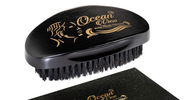
If you are looking for something to start with, the 360 Waves Pomade Brush Kit brings the basic wave tools together in one kit.
You do not need to brush harder just because a brush is firmer. Comfort and control matter more than forcing the hair into place.

Your hair still needs regular cleaning while you are training your waves.
Sweat, natural oils and styling products can build up, especially if you are brushing regularly. A shampoo that works well with your hair and scalp can help keep your routine fresh.
Some people like using a pomade or wave grease because it gives the hair some hold and makes it easier to manage.
It is optional.
If you use one, start small. You can always add a little more, but using too much from the beginning can leave your hair feeling heavy or coated.
A durag or wave cap can help keep the hair laid down after brushing. Many people use one while sleeping so the hair stays compressed instead of getting pushed around during the night.
Before worrying about how many times you should brush, get your hair into a condition where it is easy to manage.
Your hair should be clean and reasonably moisturised. You also want a haircut length that gives you enough hair to train without making the pattern difficult to control.
If you are getting a haircut, let your barber know that you are working on 360 waves. A suitable cut can make a noticeable difference to how easy it is to maintain your pattern.
Your crown is the area where the hair grows outward from a central point. It is basically the starting point for the directions your waves will follow.
Take a look at your crown before you start brushing.
See which way the hair naturally grows and use that as your guide.
This is important because two people can have completely different crown patterns. What works for one person's head may not work as well for yours.
Once you know where your crown sits, you can start working out the brushing angles around it.
This is where consistency really starts to matter.
Imagine your crown as the centre of a circle. Your brush strokes should generally move away from that centre.
For example:
From the crown towards the forehead
From the crown towards the left side
From the crown towards the right side
From the crown towards the back
The exact angle will depend on your hair and crown pattern.
Try not to rush through your brushing. Slow, controlled strokes are easier to keep consistent than quickly brushing in every direction.
And if you notice one section is not laying the way you want, do not automatically start brushing harder. Check your angle first.
This is one of those questions where there is no magic number.
You will see people online talking about brushing for hours, but that does not mean you need to do the same.
A few focused sessions can be more useful than constantly brushing without paying attention to your pattern.
The important things are:
Keep your direction consistent.
Use controlled strokes.
Avoid excessive pressure.
Give your scalp a break if it becomes irritated.
Be consistent from day to day.
Your goal is to train the pattern, not punish your scalp.
There is no exact number of days or weeks that applies to everyone.
Some people start seeing a wave pattern fairly quickly. Others need considerably more time.
Your progress can be affected by your:
Hair texture
Hair length
Natural growth direction
Crown pattern
Hair density
Brushing routine
Hair and scalp care
Haircut schedule
So if somebody online says they got waves in a certain number of days, do not assume your hair should follow the same timeline.
Look for gradual changes. The pattern may start faintly before becoming more noticeable and connected.
You can, but you do not have to.
Pomade or wave grease can help with hold and manageability, especially when you are trying to keep the hair laying in the same direction.
The mistake is thinking that more product means faster waves.
It does not.
Start with a small amount and work it evenly through the hair. Then brush your normal pattern.
If you want to include a styling product in your routine, a Water-Based 360 Wave Pomade is one option to consider.
Think of the product as something that supports your routine. Your brushing pattern and consistency are still doing the main work.
Washing can feel a little tricky when you are trying to keep your pattern in place.
You may be tempted to avoid washing because you do not want to lose your progress. But allowing sweat, oil and styling product to build up is not a good long-term solution either.
A simple wash routine is usually easier to stick with.
Get your hair thoroughly wet before applying shampoo.
Apply your shampoo and work it through gently. There is no need to aggressively scratch your scalp.
If you are looking for a product specifically suited to a wave routine, you can see Ocean View's 360 Wave Shampoo.
Make sure you rinse the shampoo out properly.
Once your hair is clean and manageable, return to your usual brushing and hair-care routine.
How often you wash will depend on your hair, scalp, lifestyle and how much product you use. If your hair feels dry after washing, your routine may need adjusting.
If you have spent any time around the wave community, you have probably heard the word wolfing.
Wolfing generally means allowing your hair to grow longer between haircuts while continuing to brush and maintain your wave pattern.
The extra length gives you more hair to work with, which can help with training and depth.
But there is a trade-off: longer hair can also be harder to control.
If you are completely new to waves, you do not need to rush into a long wolfing period. First get comfortable with your brush, your crown and your normal routine.
If your goal is a consistent pattern, constantly changing direction can make things harder.
Find your angles and stick with them.
It is easy to think that adding more pomade will make the waves come in faster.
Usually, you just end up with more buildup.
Start with a small amount and see how your hair responds.
A good wave routine should not leave your scalp feeling battered.
If you have to use a huge amount of pressure to make your hair lay down, take a look at your brush, hair length and technique.
The crown controls a lot of what happens around your head.
If your waves look like they are going in different directions, your crown is one of the first things worth checking.
There are always new brushes, pomades and wave products being recommended online.
You do not need to change your entire routine every time you see something new.
Give your routine some consistency before deciding whether something is working for you.
This one is easy to overlook.
Two people can use a similar routine and get very different-looking waves. That does not necessarily mean one person is doing everything right and the other is doing everything wrong.
Your hair has its own texture and growth pattern.
If all of this sounds like a lot, keep it simple.
Start with a quick look at your hair. If it needs a little moisture or product, use what you normally need rather than automatically adding more.
Brush your established pattern with controlled strokes.
You do not need to keep brushing every time you have a spare minute.
If you have time for another session, focus on your technique and direction rather than speed.
Give your hair a final brush following the same pattern.
Put on your durag or wave cap if it is part of your routine.
Clean your hair and scalp properly, rinse thoroughly and return to your normal routine once your hair is ready.
That is really the foundation.
You can make the routine more detailed later once you understand what your hair responds to.
Once you start seeing waves, the next challenge is keeping them consistent.
Keep doing the things that helped create the pattern in the first place.
Brush in the same general directions, look after your hair and scalp, keep product buildup under control and maintain a haircut length that works for you.
Your routine may also need to change slightly as your hair grows.
For example, the brush that feels comfortable on very short hair may not be the brush you prefer once your hair gets longer.
There is nothing wrong with adjusting your routine. Just avoid changing everything at once.
No.
A beginner can start without buying a huge collection of wave products.
The basics matter much more:
A suitable haircut
A brush you can use comfortably
Consistent brushing
Clean hair and scalp
Appropriate moisture
Patience
A routine you can actually maintain
A product can be useful, but it cannot do the brushing for you.
If you are putting together your first wave routine or simply want to explore more options for hair, wave and beard care, you can browse the wider range at Ocean View Store.
Learning how to get 360 waves is less about finding one secret product and more about getting the basics right.
Learn your natural pattern first. Pay attention to your crown. Find brushing angles that make sense for your hair and stick with them.
Keep your hair clean, avoid loading it with product and do not feel pressured to match somebody else's timeline.
You may not see a dramatic change after a few days. That is normal.
Keep working on the pattern, make small adjustments when necessary and give your hair time to respond.
A simple routine that you can consistently follow is usually much easier to maintain than an overly complicated one.
Start with a suitable haircut, learn your natural hair and crown pattern, then brush consistently from the crown towards the front, sides and back. Keep your hair clean and manageable, and use a durag or wave cap if it suits your routine.
There is no set timeframe. Hair texture, length, growth pattern, crown, brushing consistency and individual hair growth can all affect how quickly waves develop. Some people notice a pattern within weeks, while others need longer.
Keep the routine simple. Get a suitable haircut, choose a comfortable wave brush, identify your natural pattern and practise consistent brushing. Focus on doing the basics well before adding lots of products.
There is no required number of hours or sessions. Several short, focused sessions can be enough for a beginner. Consistent direction and good technique are more important than brushing excessively.
Choose a brush based on your hair length, texture and comfort. A softer brush can work well for shorter hair, while a firmer brush may offer more control as the hair gets longer.
Yes. Your hair needs enough length to form and train a visible pattern, but the ideal length can vary depending on your hair texture and how your hair grows.
No. Pomade is optional. Consistent brushing, an appropriate haircut and basic hair care are more important. Some people use pomade or wave grease for additional hold and manageability.
It depends on your hair, scalp, activity level and use of styling products. The goal is to keep your hair and scalp clean while avoiding a routine that leaves your hair excessively dry.
Wolfing is when someone allows their hair to grow longer between haircuts while continuing to train the wave pattern. The extra length can provide more hair to work with, although it can also make the hair more difficult to manage.
Your natural crown, growth direction, hair length, brushing angles and consistency can all affect how waves connect. Check your brushing pattern around the crown before simply increasing the amount of brushing.
No. Hair texture, density, crown and natural growth direction vary from person to person. Your finished pattern may look different from another person's even if you follow a similar routine.
Maintain them with consistent brushing, suitable hair care, regular cleansing, controlled product use and a haircut length that works with your pattern. A durag or wave cap can also help keep the hair laid after brushing.
You can start with a suitable wave brush and shampoo. A pomade or wave grease and a durag or wave cap are optional additions depending on your routine and personal preference.
No. More pressure does not automatically produce better waves. Controlled brushing that follows your natural pattern is more useful than aggressively brushing the hair or scalp.